
Running a trade business rarely fits neatly between nine and five.
For many IDS customers, the working day is spent meeting customers, measuring projects, carrying out installations or managing a showroom. Quotations, orders and administration often have to happen later.
IDS Chairman Andy Russell understands that the businesses IDS works with operate in very different ways, from smaller one- or two-person companies through to larger teams.
That is one of the reasons IDS has continued to invest in the digital side of the business.
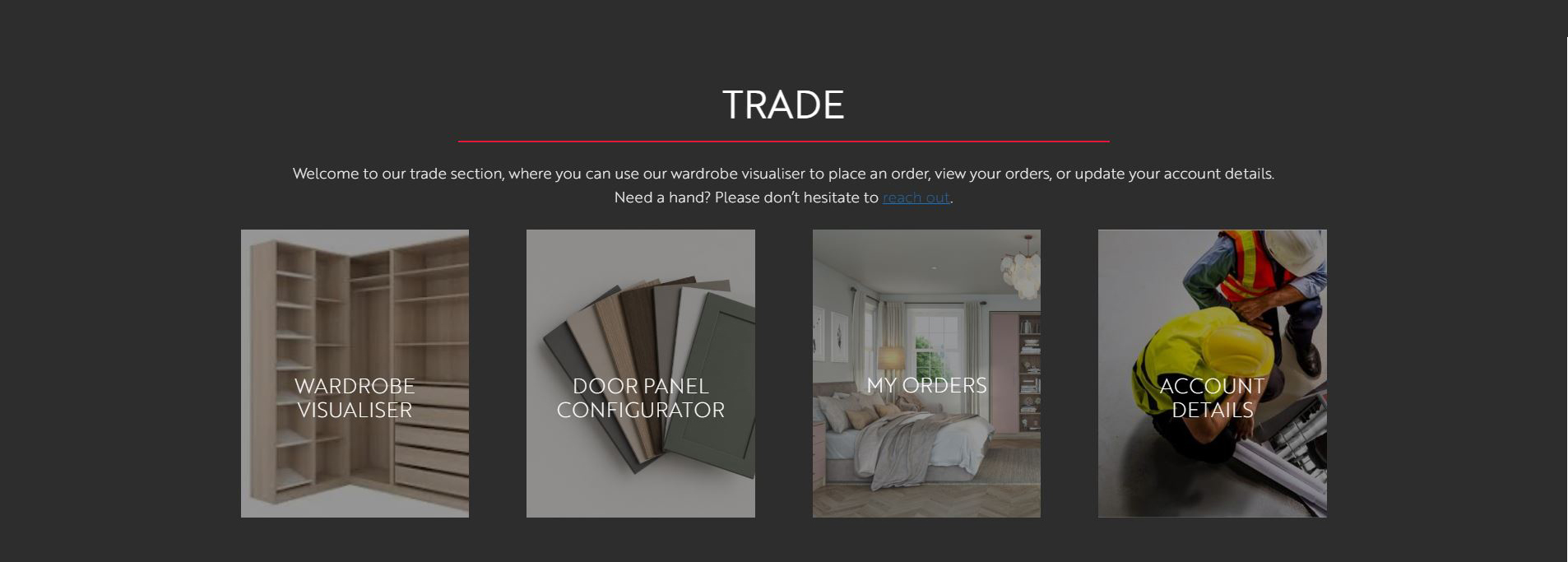
The Trade Portal, Sales Configurator and visualiser are designed to give trade customers greater flexibility and create a more straightforward journey from the first conversation with their customer through to placing an order with IDS.
As Andy puts it, businesses have to “move with the times.”
For IDS, that means making sure the way customers interact with the business develops alongside the products and manufacturing operation behind it.
Digital Tools Designed Around the Way You Work
For a smaller trade business, the person measuring a bedroom in the morning could be the same person carrying out an installation that afternoon and preparing quotations at home later that evening.
That means traditional office hours do not necessarily reflect the way the trade actually works.
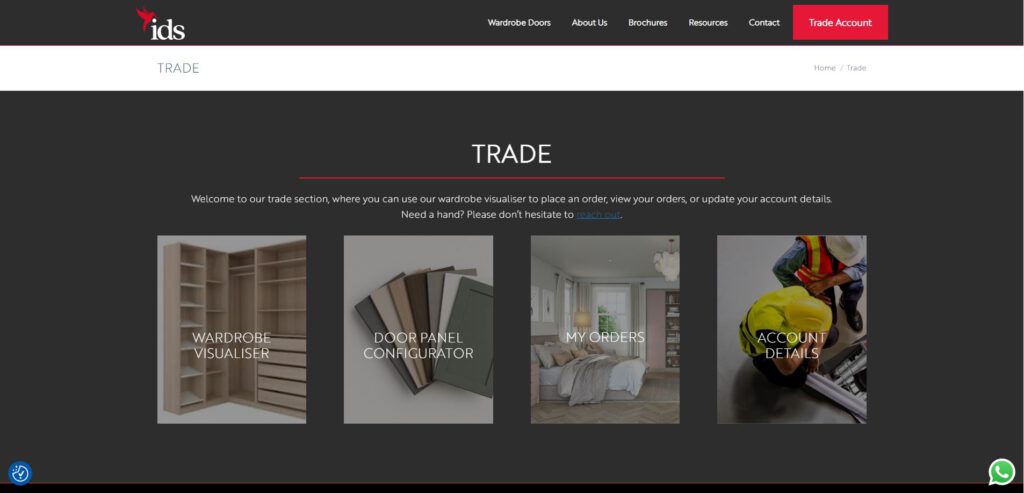
The IDS Trade Portal gives customers greater flexibility over when they deal with quotations and orders.
Rather than having to wait until the following working day to move a project forward, customers can access the system and carry out routine tasks at a time that works around their own schedule.
An order prepared in the evening, for example, can already be with IDS, ready to be picked up and acknowledged the following morning.
It is a relatively simple change, but for a busy trade customer it removes unnecessary waiting from the process.
Helping Your Customer See the Finished Design
The investment starts before the order stage.
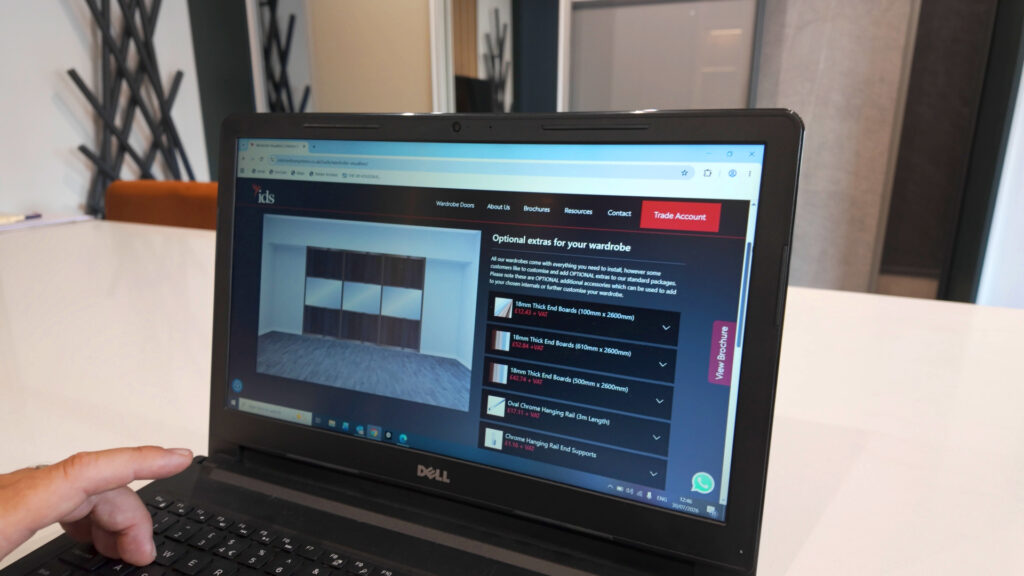
The IDS visualiser gives trade customers another way to bring a design to life and help their own customers understand the choices available to them.
Wardrobe projects can involve decisions around door styles, colours, finishes and configurations. For someone unfamiliar with those products, visualising how the individual elements will work together is not always easy.
Being able to show those choices visually can make that conversation much clearer.
Instead of asking the customer to build the finished wardrobe in their imagination, the visualiser can help demonstrate how their choices could look together before the specification moves forward.
That gives the technology a valuable role in the sales process too.
It is not simply about making life easier for IDS. It is about giving IDS trade partners tools that can help them communicate more effectively with their own customers.
From Visualisation to Specification
Once the customer has a clearer idea of what they want, the digital journey can continue into the specification.
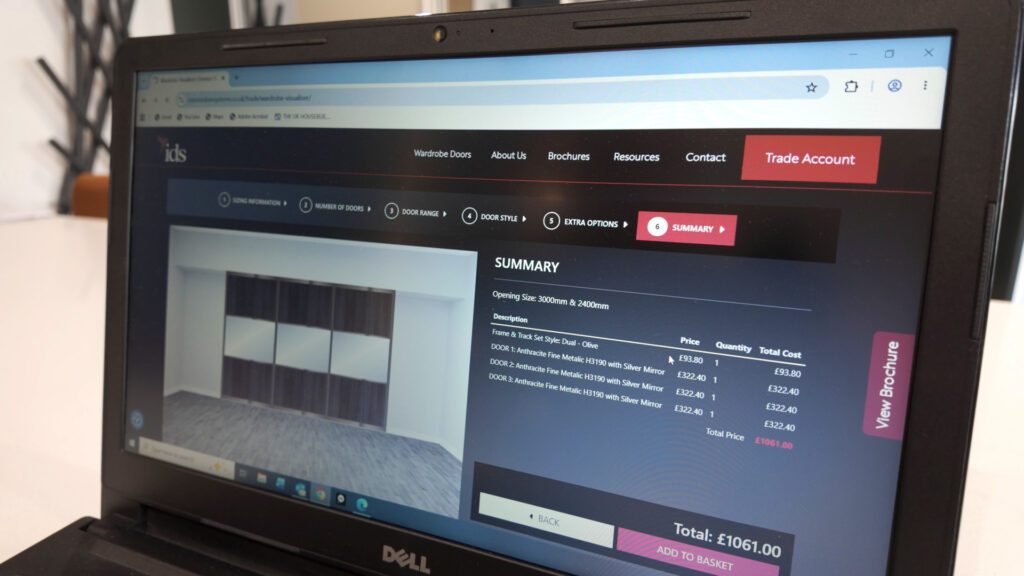
Through IDS’s online tools, trade customers can work through the different elements of the order, including door styles, finishes, sizes and configurations.
Pricing can be viewed alongside that specification, helping the trade customer understand the commercial side of the project as it develops.
This creates a much clearer progression:
Visualise. Specify. Quote. Order. Track.
Rather than each stage feeling like a separate process, the aim is to make it easier to move from one to the next.
Making the Move from Quote to Order Simpler
This is where Andy sees one of the biggest benefits of the investment.
He describes the aim as creating a “seamless, swift order placement opportunity.”
The important word there is seamless.
The Trade Portal is not simply somewhere to type in an order.
It is about reducing the friction between agreeing what the customer wants, preparing the quotation and turning that quotation into a confirmed order.
When your own customer is ready to proceed, you should be able to move the project forward without introducing unnecessary additional steps.
And because the system can be accessed outside normal office hours, you are not dependent on IDS being open at the same time as you are carrying out your own administration.
For businesses where evenings are often when quotations and paperwork get completed, that flexibility can make a genuine difference.
Greater Visibility After the Order Is Placed
The portal also continues to be useful once the order has been submitted.
Trade customers can access their dedicated pricing and track their orders through their account.
When you are managing several projects or installations at the same time, that visibility can help make the administrative side of the business easier to manage.
Your Trade Account also gives you access to current Trade Partner promotions and offers, giving you another reason to use the portal as an everyday business tool rather than simply an online order form.
Digital Convenience Without Losing Personal Support
One point that is important to IDS is that investing in digital technology does not mean replacing the relationship with the customer.
Some jobs will always benefit from a conversation.
You might need help with a specification, advice on a finish, technical guidance or reassurance before an unusual order goes into production.
The portal and visualiser are there to give customers another way to work with IDS.
For straightforward tasks, you have the flexibility to manage more yourself and at a time that suits you.
When you need somebody, the IDS team is still there.
That combination of digital convenience and personal support is an important part of how IDS wants the customer experience to develop.
Investment That Goes Beyond the Factory Floor
IDS has continued to invest across the wider business, including its manufacturing technology and production operation.
But Andy’s comments highlight an important point: investment is not only about what happens after an order reaches the factory.
The experience before that point matters too.
Can you help your customer understand what they are buying?
Can you develop the specification efficiently?
Can you see the relevant pricing?
Can you prepare the quotation?
Can you turn it into an order without unnecessary delays?
Can you access the information you need once the order is underway?
IDS’s digital investment is intended to make those stages easier too.
It is part of the same principle Andy describes when he talks about the need to “move with the times”: continuing to look at how customers work and developing the business around those changing needs.
Making IDS Easier to Do Business With
Ultimately, the success of the Trade Portal and visualiser will not be measured simply by the technology behind them.
It will be measured by whether they make life easier for the people using them.
For IDS trade partners, the journey can start by helping a customer visualise their new wardrobe, move into specification and quotation, progress into an order and continue through to tracking that order.
And much of that can happen around the demands of your own working day.
For retailers, installers, designers and other trade businesses, that means more control over the process and fewer unnecessary barriers between an initial customer enquiry and a confirmed order.
That is what the investment is really about.
Making it simpler, quicker and more flexible to do business with IDS.
If you’d like to find out more about the IDS Trade Portal, visualiser or becoming an IDS Trade Partner, speak to the IDS team about getting started.