
When you order a made-to-measure sliding wardrobe door, the finished product is only one part of the story.
Behind every Kensington door is a process that starts with your measurements and specification and continues through order planning, material preparation, profile manufacture, hands-on construction, quality checks, protected storage and delivery.
For trade customers, understanding that process matters.
If you have promised an installation date to your customer, are working to a development programme or simply need confidence that what you order is what arrives, you are relying on much more than the appearance of the finished door.
With Kensington, much of that journey is controlled directly by IDS at its UK manufacturing facility.
So, what actually happens after you place your order?
1. It Starts With Your Space
Every Kensington door starts with a set of measurements.
Because Kensington doors are made to measure, the dimensions you provide form the basis of the manufacturing process. Height and width need to take account of the actual opening, including any variations across walls, floors and ceilings.
You also need to think about the wider installation.
Is the wardrobe running wall to wall? Does the design require end panels? Are there skirting boards, coving or other features that affect the opening? How many doors are required and how will they overlap once installed?
Getting these details right at the beginning helps make everything that follows much more straightforward.
2. Building Your Kensington Specification
Measurements establish the size of the doors, but they are only the start of the specification.
Kensington is IDS’s steel-profile sliding wardrobe system, designed to give you flexibility around the requirements of the individual project.
There are 15 frame finishes available, alongside a choice of MFC, glass and mirror options. Different materials can also be combined within divided door configurations, allowing the system to suit a wide range of bedroom styles and customer requirements.
Soft-close is supplied as standard.
That flexibility means one Kensington system can be used very differently from one project to the next.
You might be specifying full-height mirrored doors, coordinating MFC finishes with other bedroom furniture or repeating the same specification across a larger development.
The important point is that the door is being manufactured around your project, rather than asking you to work around a limited selection of standard sizes.
3. From Customer Order to Production Plan
Once the specification has been agreed, the order has to move from the customer-facing side of the business into production.
This stage is easy to overlook, but it is an important part of made-to-measure manufacturing.
The information supplied with the order needs to translate into the materials, profiles, panels and components required to produce the finished doors.
Dimensions, quantities, finishes and configurations all need to remain tied to the individual job as it progresses through the factory.
This creates a clear link between the specification you place and the product that eventually reaches you.
For a bespoke manufacturer, production doesn’t begin with somebody simply taking a standard door from stock.
It begins with understanding what needs to be made for that particular order.
4. Keeping Materials and Profiles Ready for Production
The IDS manufacturing facility holds profiles in different finishes alongside the materials and components required to manufacture customers’ orders.
This matters because manufacturing capacity is only useful when the materials needed to fulfil those orders are available.
Keeping commonly required materials and profiles on site gives IDS greater control over the manufacturing process and helps keep production moving.
For you, that matters further down the line.
If you are coordinating fitters, agreeing installation dates or managing several projects at once, reliability behind the scenes can make a significant difference to your own scheduling.
Stockholding may not be the most visible part of a finished Kensington wardrobe, but it plays an important role in getting it there.
5. The Kensington Profile Begins in the IDS Steel Mill

One of the most distinctive parts of the Kensington manufacturing process happens before a door reaches the assembly stage.
IDS operates its own steel mill within its UK manufacturing facility.
Rather than simply receiving a completely finished steel profile and assembling it into a door, IDS manufactures the Kensington profile on site.
Steel passes through the roll-forming line, where it is progressively shaped through the machinery until the required profile emerges at the other end.
It is a good example of what UK manufacturing means in practice.
IDS isn’t simply fitting together a collection of finished bought-in components. An important part of the Kensington system itself is being manufactured within the business.
The IDS steel mill has the capacity to manufacture enough profile for up to 2,200 doors within a 24-hour shift.

The capacity is impressive, but the more important benefit for trade customers is control.
Keeping this capability in-house means IDS can manage the availability and production of one of the main components within the Kensington system directly.
6. From Steel Profile to Bespoke Sliding Door
Once the materials for an order are ready, the individual components begin to become a finished Kensington door.
This is where you see the balance between machinery and hands-on manufacturing.
The steel mill provides the consistency needed to manufacture the profile, but the finished doors are then constructed around the requirements of the individual order.
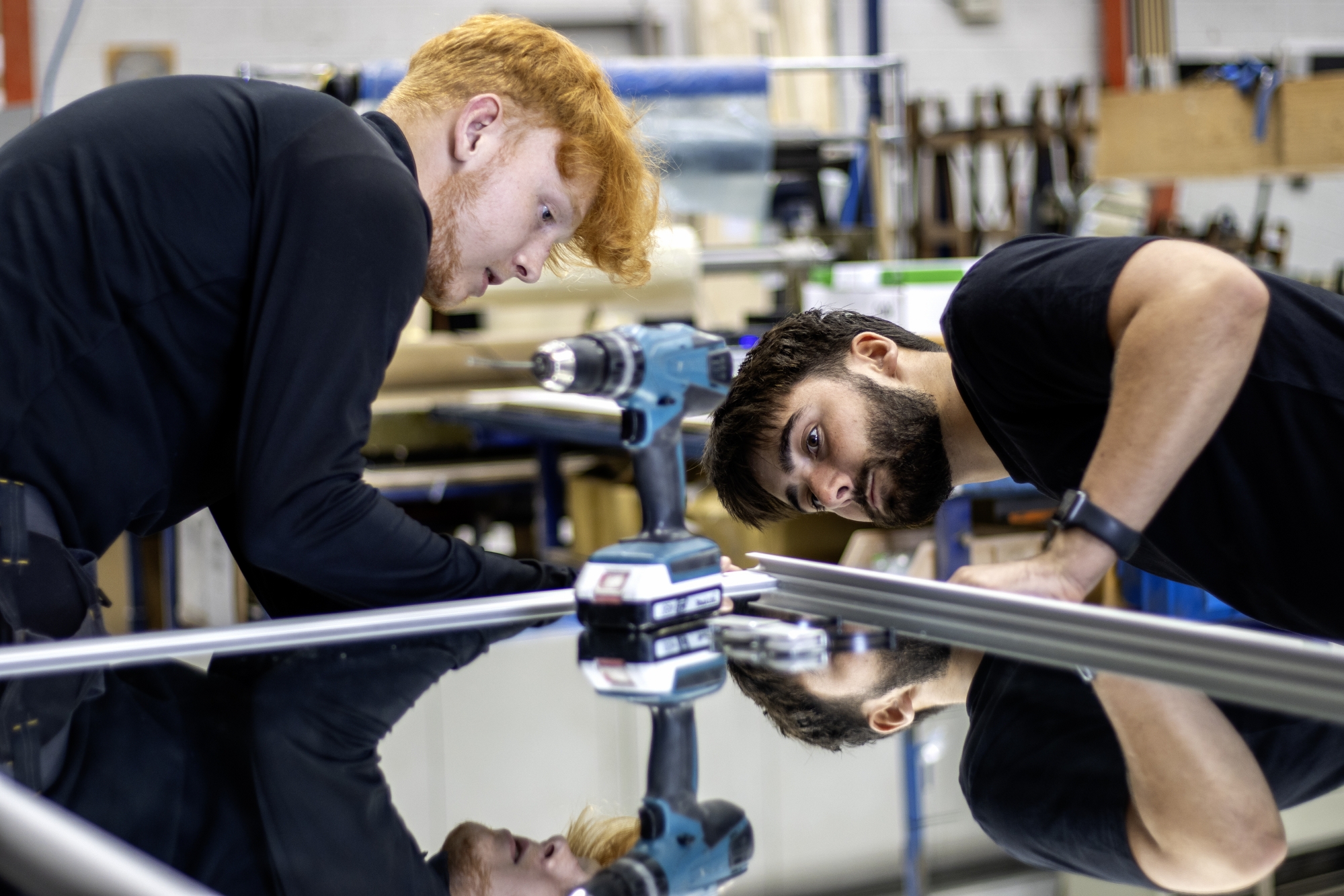
Profiles are prepared for the required dimensions before frames, panels and components are brought together at the production benches.
Full-size Kensington doors are worked on by the production team rather than simply passing through a completely automated production line.
That hands-on element is important.
IDS describes its wardrobe doors as handmade and bespoke to order. Here, that means individual components being brought together into a door manufactured specifically for the opening originally supplied.
Soft-close and the associated running components also form part of the finished sliding system, so the door, tracks and mechanisms all need to work together once installed.
7. Capability. Care. Capacity.
Three things sit behind the way IDS manufactures Kensington sliding wardrobe doors:
Capability. Care. Capacity.
Together, they help explain why the manufacturing process matters just as much as the finished door.
Capability
Capability comes from having the manufacturing equipment, people and knowledge needed to produce bespoke sliding wardrobe doors in-house.
From producing the Kensington steel profile through to constructing the finished door, IDS controls key stages of the process within its own operation.
That gives the business the capability to take your specification and turn it into a made-to-measure finished product.
Care
Care is seen throughout the journey.
It is in the hands-on construction of each bespoke door, the quality procedures before dispatch, the way finished products are protected and stored, and how they continue to be handled as they move towards delivery.
For a made-to-measure product, those details matter.
A door needs to look right, function correctly and arrive ready for the next stage of the project.
Capacity
Capacity is about being able to support demand without losing the control that bespoke manufacturing requires.
The scale of the steel mill, the materials and profiles held on site, the manufacturing facility and the wider production operation give IDS the capacity to support everything from individual orders through to larger requirements.
For trade customers, that combination is important.
You don’t just need a supplier that can make the product.
You need one with the capability to manufacture it, the care to get it right and the capacity to keep your projects moving.
8. Quality Control Before the Door Leaves Production

Being able to manufacture more doors only matters if those doors are being produced consistently.
That is why quality control forms part of the journey before a Kensington door reaches dispatch.
IDS uses a Quality and Specification Certification process as part of its quality procedures.
For a made-to-measure product, those checks matter.
A door needs to correspond with the job it was manufactured for. Components need to function correctly. Finished surfaces need to be handled carefully, and the completed product needs to be ready for the next stage of its journey.
For a retailer, catching an issue before dispatch can avoid rearranging an installation and dealing with a disappointed homeowner.
For an installer, it can prevent arriving on site with something that cannot be fitted.
And across a larger development, avoiding repeated issues becomes even more important.
Quality control isn’t only about how the door looks.
It is about helping reduce disruption further down the supply chain.
9. Managing Materials Throughout the Manufacturing Process
Manufacturing bespoke doors inevitably creates offcuts and waste materials.
Within the IDS factory, different waste materials are separated as part of the day-to-day manufacturing process, helping IDS manage materials more effectively once they leave the production line.
It is another part of the operation that sits behind the finished product your customer eventually sees.
10. Protecting the Finished Door Before Dispatch
Completing the door is not the end of its journey.
It still needs to reach you in the condition in which it left production.
This is particularly important with large made-to-measure sliding doors that can incorporate finished steel profiles, decorative panels, mirrors and glass.
Completed doors are protected and stored upright in dedicated racks and trolleys before dispatch.
Protective materials help safeguard the finished products, while handling instructions help ensure doors continue to be moved correctly after manufacture.
This gives completed orders a controlled place to go once they leave the production benches.
It also helps keep products organised as they move towards dispatch.
That care between manufacture and loading is an important part of the wider process.
A door can be manufactured perfectly, but it still needs to be handled properly before it ever reaches your customer or project.
11. From the Factory to IDS Delivery

Once the order is ready for dispatch, the next stage is getting the finished products from the IDS facility to their destination.
IDS operates its own delivery fleet and supplies customers nationwide. Keeping delivery within the IDS operation gives greater control between dispatch and arrival, while reducing the number of external handovers involved.
For trade customers, it also creates a clearer link between the business manufacturing the doors and the business delivering them.
12. Ready for Installation
By the time the doors arrive, a process that began with a set of measurements has become a finished made-to-measure sliding system.
The top and bottom tracks can then be installed before the doors are positioned and adjusted within the opening.
At this point, all the work carried out earlier in the journey comes together. Accurate measurements and production information support installation, while the manufacturing, quality checks, careful handling and delivery behind the order help ensure the doors arrive ready for the next stage of the project.
Why the Full Process Matters to Your Business
Your customer may only ever see the finished wardrobe.
You see everything that has to happen to get it there.
You have to specify the product, manage expectations, organise fitting and make sure what arrives reflects what was originally promised.
That is why choosing a sliding wardrobe supplier is about much more than choosing a frame colour or door finish.
You are also choosing the manufacturing process behind it.
With Kensington, your order moves through a UK manufacturing operation where IDS controls key stages including steel profile manufacture, stockholding, bespoke door construction, quality control, protected storage and delivery.
Behind those stages are the three things that help make the process work: Capability. Care. Capacity. Together, they give you greater visibility and confidence in what happens after you place your order.
And when you’re putting your own name in front of your customer, that matters.
Kensington: Made to Measure, Made for Your Project
Kensington gives you the flexibility to create a sliding wardrobe around your customer’s space, style and specification, backed by the manufacturing capability needed to turn that design into a finished product.
Whether you’re specifying a one-off bedroom, supplying wardrobes through a retail showroom or managing requirements across a larger development, the same process sits behind every order.
Your measurements. Your specification. Manufactured to order, carefully handled and delivered ready for the next stage of your project.
If you’d like to offer Kensington sliding wardrobe doors to your customers, speak to the IDS team about opening a trade account, requesting samples or specifying your next project.